







Oct 25–28SuiteWorld 2026 — Early bird ends Jul 31
Headless CMS for NetSuite

Build your components once. Marketing ships every page after that.

We add Sanity — a visual headless CMS — to the SuiteCommerce or NetSuite storefront you already run, and build the component library your brand is made of. Marketing composes landing pages and campaigns from it, on brand, with drafts and live preview. NetSuite stays the system of record for products, pricing, and orders. No replatform.

Quick reply, from the team that lives in NetSuite.

Tell us about your project
Oracle NetSuiteSanity

Building on NetSuite & SuiteCommerce since 2017 · Sanity content layer · developer-built components, marketing-owned pages

See how it works
Content layer · storefront · system of record
Sanity
Content · headless CMS
SuiteCommerce
Storefront
Oracle NetSuite
ERP · system of record

Content flows from Sanity into your storefront. Products, pricing, and orders stay in NetSuite — the CMS never touches them.

The Problem

Your store runs fine. Your content doesnt compound. In SuiteCommerce every page is custom work so nothing carries forward, and the brand drifts one campaign at a time.

CCTs don’t compound

Custom Content Types are cumbersome to build, heavy to render, and tied to the page they were made for. Nothing you shipped last quarter makes this quarter faster.

Content and commerce are coupled

Every new block ships inside the storefront codebase, next to skins, templates and checkout. So adding one carries deploy risk, and the library grows only as fast as the release cycle allows.

The brand drifts, page by page

With no governed component library, every campaign gets a one-off layout and a hero that’s almost right. Nobody approves the drift — it just accumulates.

And the pages are slow

SMT-assembled pages carry markup and scripts no one budgeted for. The campaign that finally ships is the slowest page on the site.

SuiteCommerce is built to run your store, and it runs it well. What it isn't built for is giving marketing a governed set of components to compose from. Without one, every page is bespoke and consistency erodes the more you ship. That's the gap a headless CMS layer closes — without changing how the store works.

Trusted by ecommerce teams running on NetSuite

Tekton
DecksDirect
Clean Simple Eats
KLIM
ExpertVoice
FlowWall
Nearly Natural
Mosko Moto
509
Amatheon
Atlanta SuiteSolutions
BioBag
Bryghtside
CartridgesDirect
Contractors Direct
Curopet Care
Designer Wellness
DIY Home Center
DLG Brands
EAS
FoamIt
Hartmann & Forbes
IC Realtime
Intente
Kurz
Life Wear
Limebox
Master Building Products
Northern Pet Company
Objective
Oborne
OdeCloud
Podium1 Racing
Prekopolis
Prospect Fastener
Roots Management Group
Sacvin
Scirst
Stinger
United Motorsports
VersaPay
WeLink
Worlds Away
Tekton
DecksDirect
Clean Simple Eats
KLIM
ExpertVoice
FlowWall
Nearly Natural
Mosko Moto
509
Amatheon
Atlanta SuiteSolutions
BioBag
Bryghtside
CartridgesDirect
Contractors Direct
Curopet Care
Designer Wellness
DIY Home Center
DLG Brands
EAS
FoamIt
Hartmann & Forbes
IC Realtime
Intente
Kurz
Life Wear
Limebox
Master Building Products
Northern Pet Company
Objective
Oborne
OdeCloud
Podium1 Racing
Prekopolis
Prospect Fastener
Roots Management Group
Sacvin
Scirst
Stinger
United Motorsports
VersaPay
WeLink
Worlds Away
Why a headless CMS layer

Marketing ships pages. NetSuite stays the source of truth.

Built once, composed forever

Your developers build each block once, on brand and performance-tested. From then on marketing assembles pages from that library — drafts, preview, publish, no release cycle.

Freedom inside the brand

We design the block library — heroes, galleries, feature rows, forms, promos. Marketing composes freely from it and cannot drift outside the design system.

NetSuite stays the system of record

Products, pricing, inventory, and orders stay authoritative in NetSuite. The CMS owns content only — it never touches your commerce data.

No replatform required

Sanity sits alongside the SuiteCommerce store you already run. You keep your storefront, your checkout, and your ERP exactly as they are.

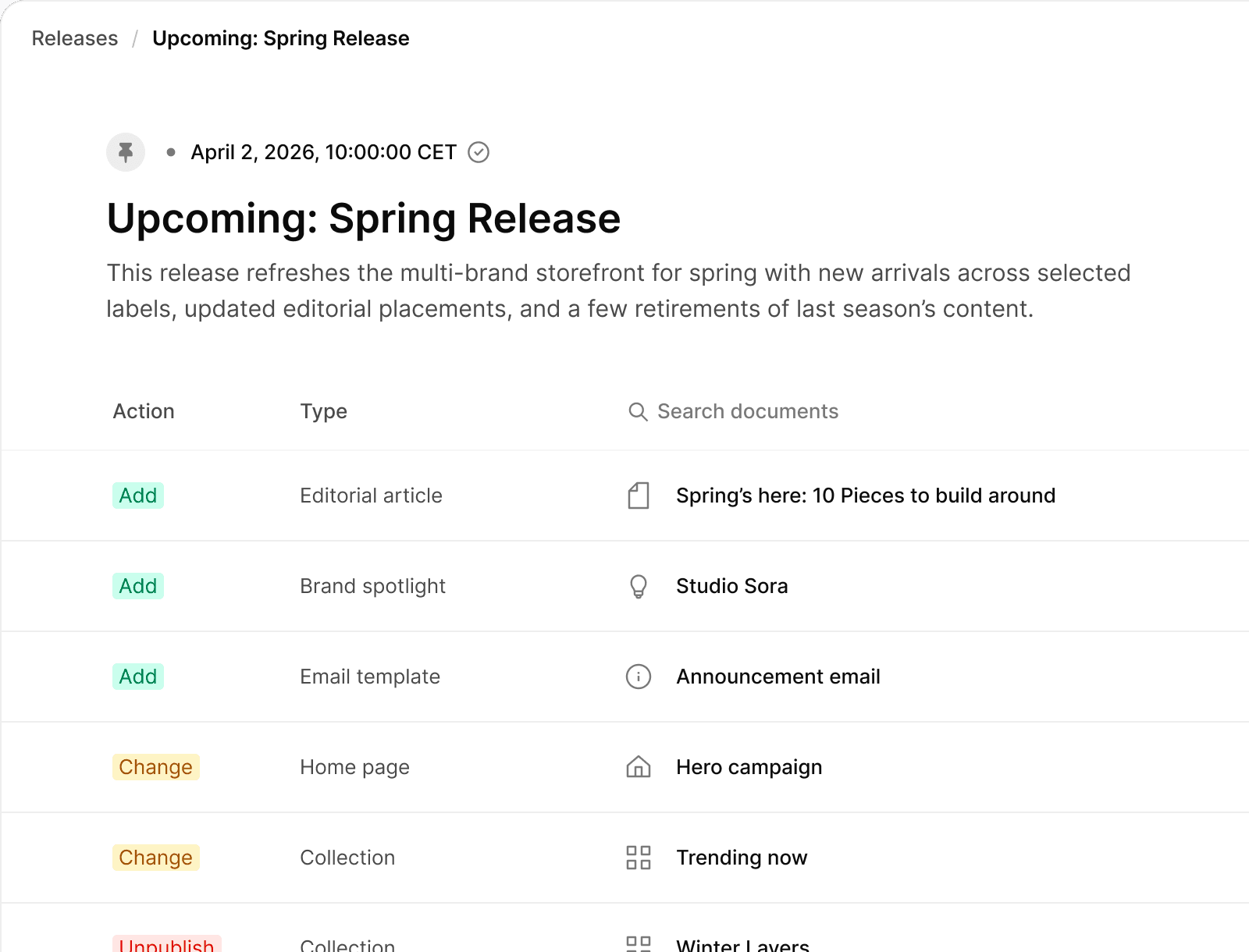
Live preview and scheduled releases

Editors see the real page before it publishes, and stage a whole campaign to go live on a date — automatically, without a midnight deploy.

Engineering work that accumulates

Every block your team builds stays in the library and gets reused. Engineers grow a system instead of rebuilding pages — and marketing never waits on them to publish.

A content workspace for marketing, on top of the store you already run.

Sanity headless CMS
Custom component library
Live preview
Scheduled releases
SuiteCommerce integration
NetSuite stays system of record
No replatform
Team training & handover
How it works

A content layer, not a replatform

We design a component library, model it in Sanity, and connect it to your storefront. Marketing composes pages from those components; the storefront renders them fast; NetSuite keeps running the commerce underneath. Three layers, each doing the job it's good at.

  • ContentSanity Studio — marketing builds and publishes pages from your components.
  • StorefrontYour SuiteCommerce site renders the content, fast, with no replatform.
  • System of recordNetSuite stays authoritative for products, pricing, inventory, and orders.

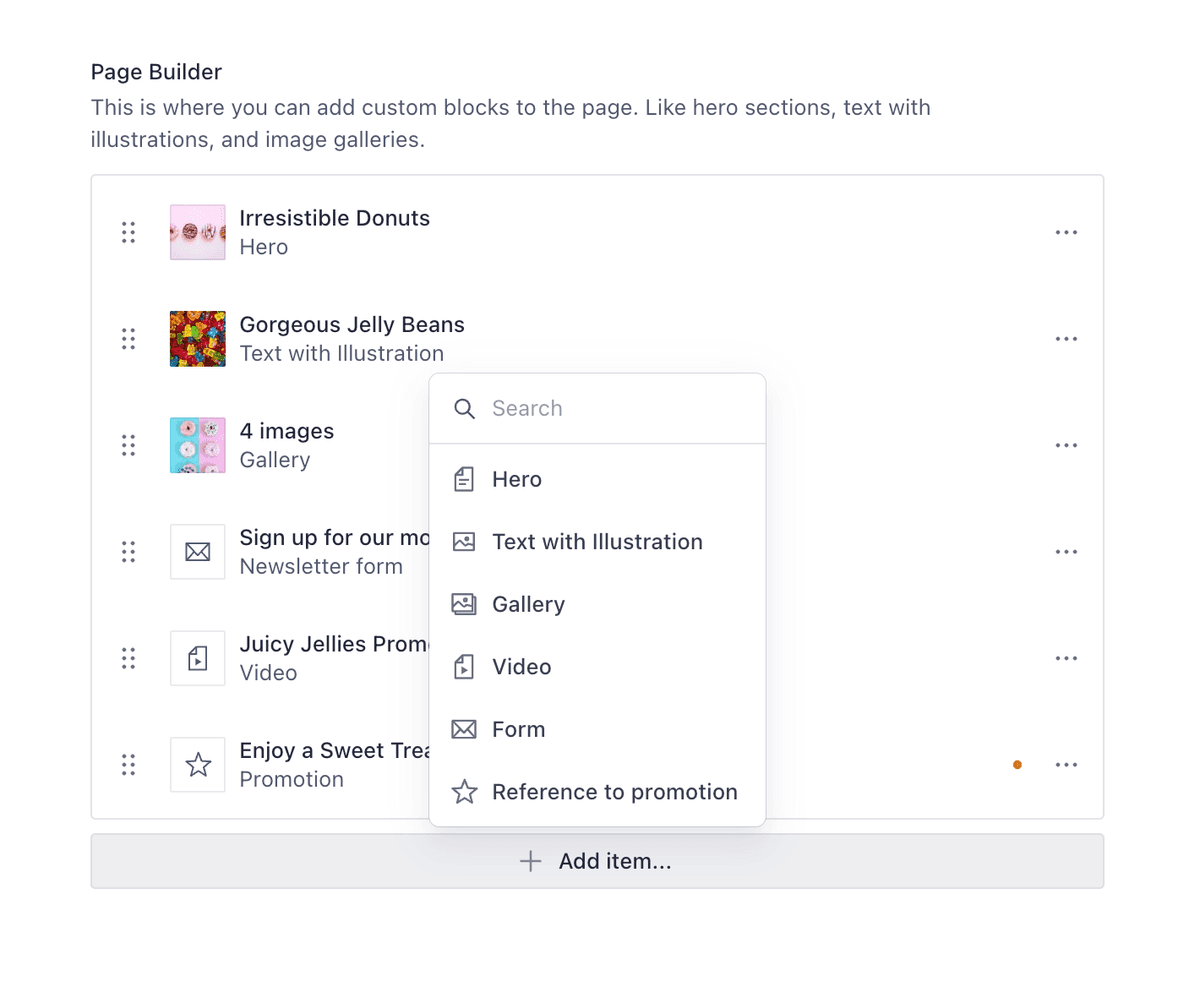
Building a page, block by block — the actual UI

Not a mockup. This is the workspace your marketing team publishes from.

Sanity Studio page builder — a landing page assembled from hero, gallery, form, video, and promotion blocks
Landing page builder

Marketing assembles pages from the blocks we design — heroes, galleries, newsletter forms, video, promotions.

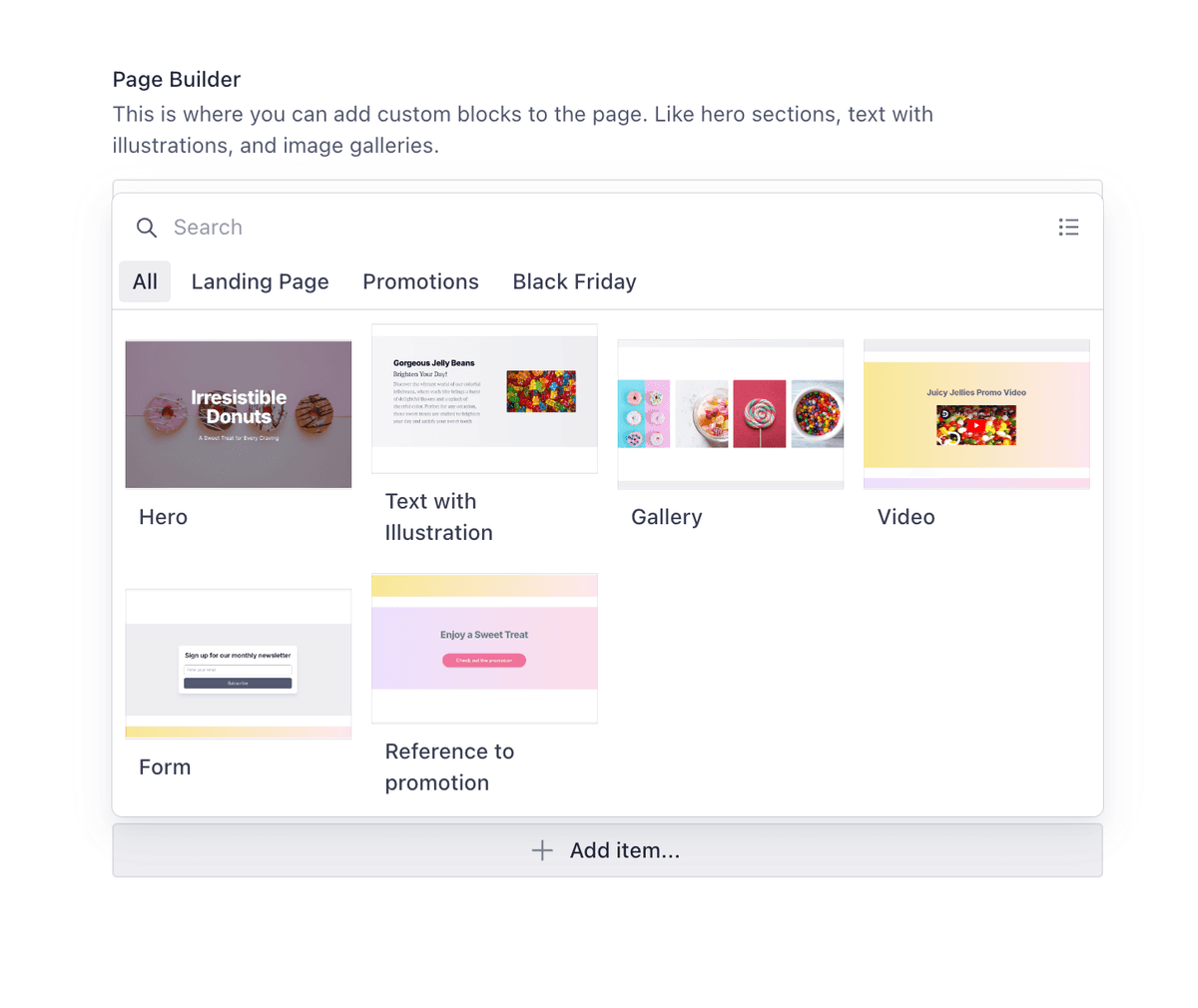
Sanity Studio visual block picker — every block shows a preview of its layout before inserting
Visual block library

Every block shows a preview of its layout before it is added. Marketing picks designs, not code.

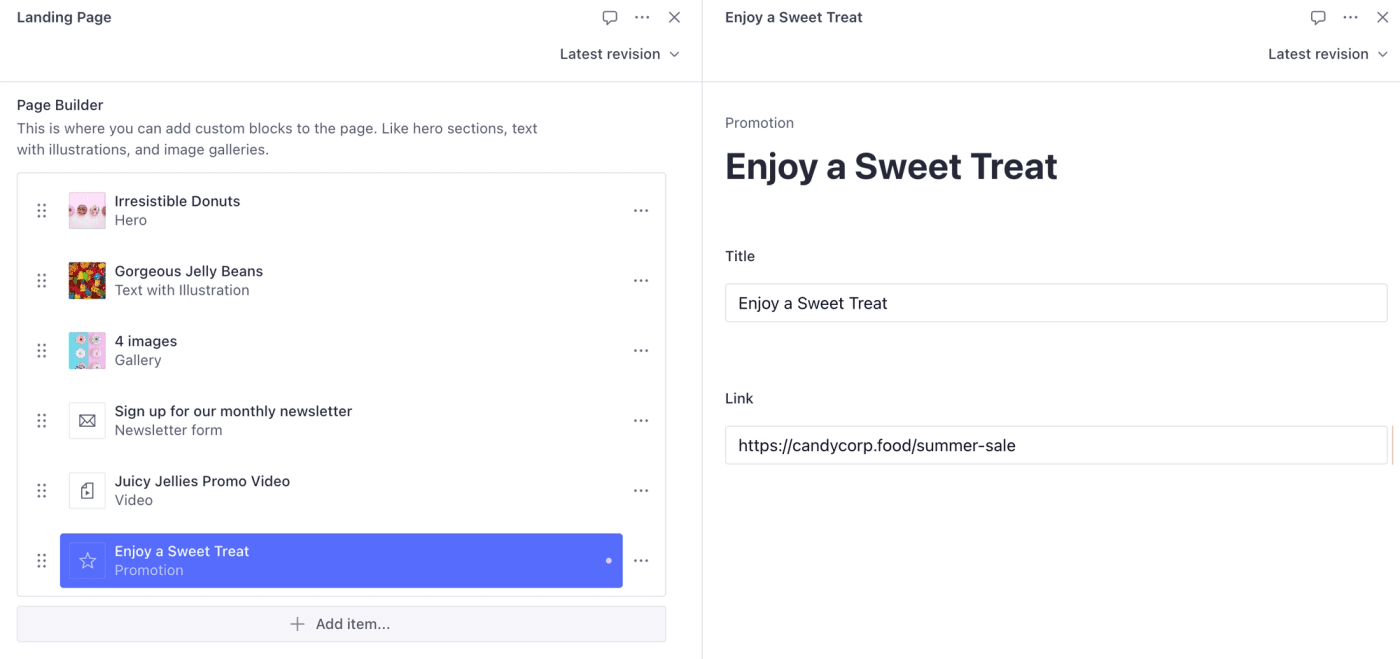
Sanity Studio live preview — the rendered page updates next to the block editor
Live preview

Reorder and edit blocks and watch the real page update right next to the editor — before anything goes public.

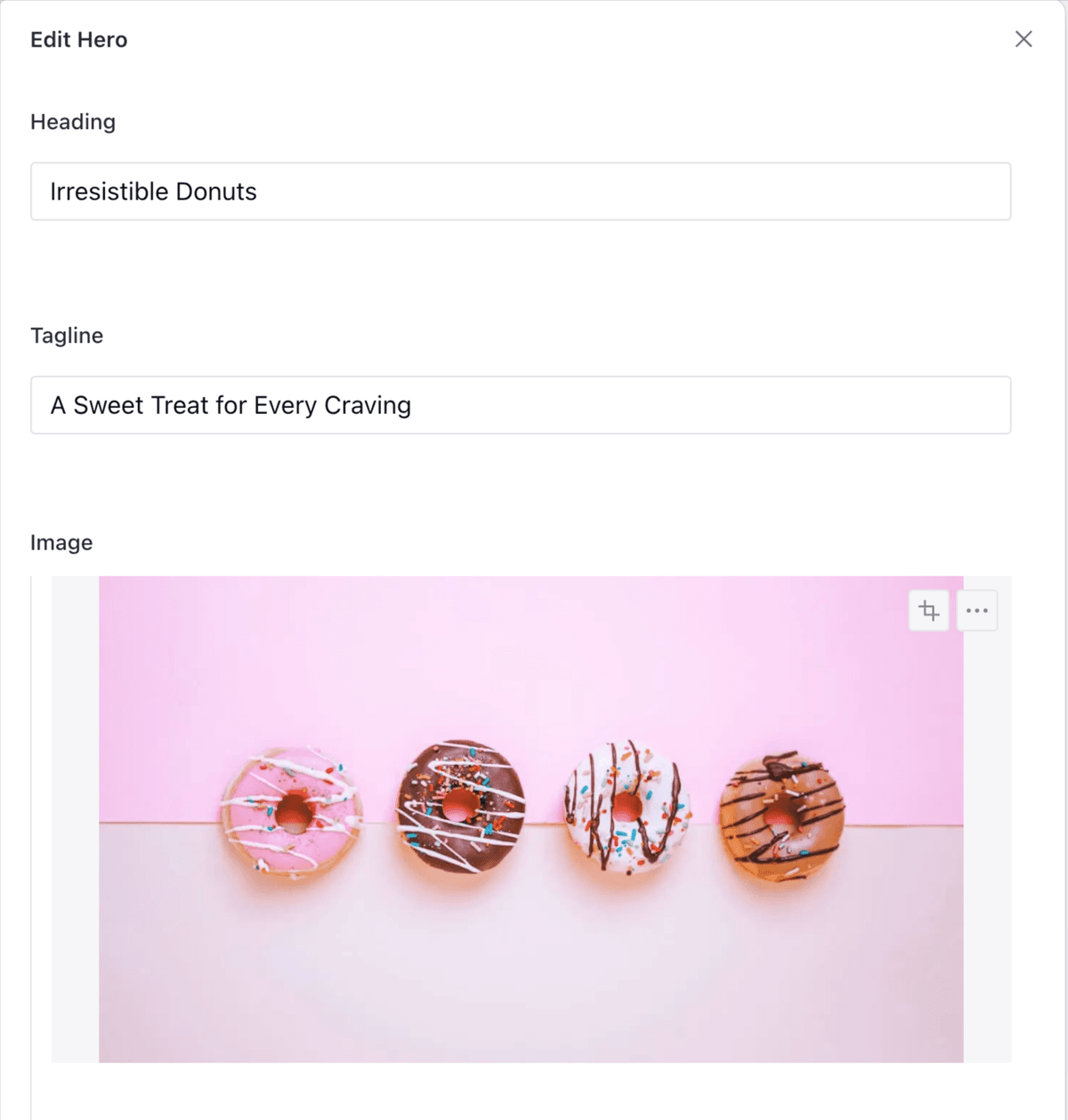
Sanity Studio block editing — a hero block edited through plain heading, tagline, and image fields
Field-level editing

Each block opens as plain fields — heading, tagline, image. The design system stays intact, impossible to break.

Sanity Studio content release — staged page changes publishing together on a scheduled date
Scheduled releases

Stage every page change for a campaign and publish it all together, on a date — automatically.

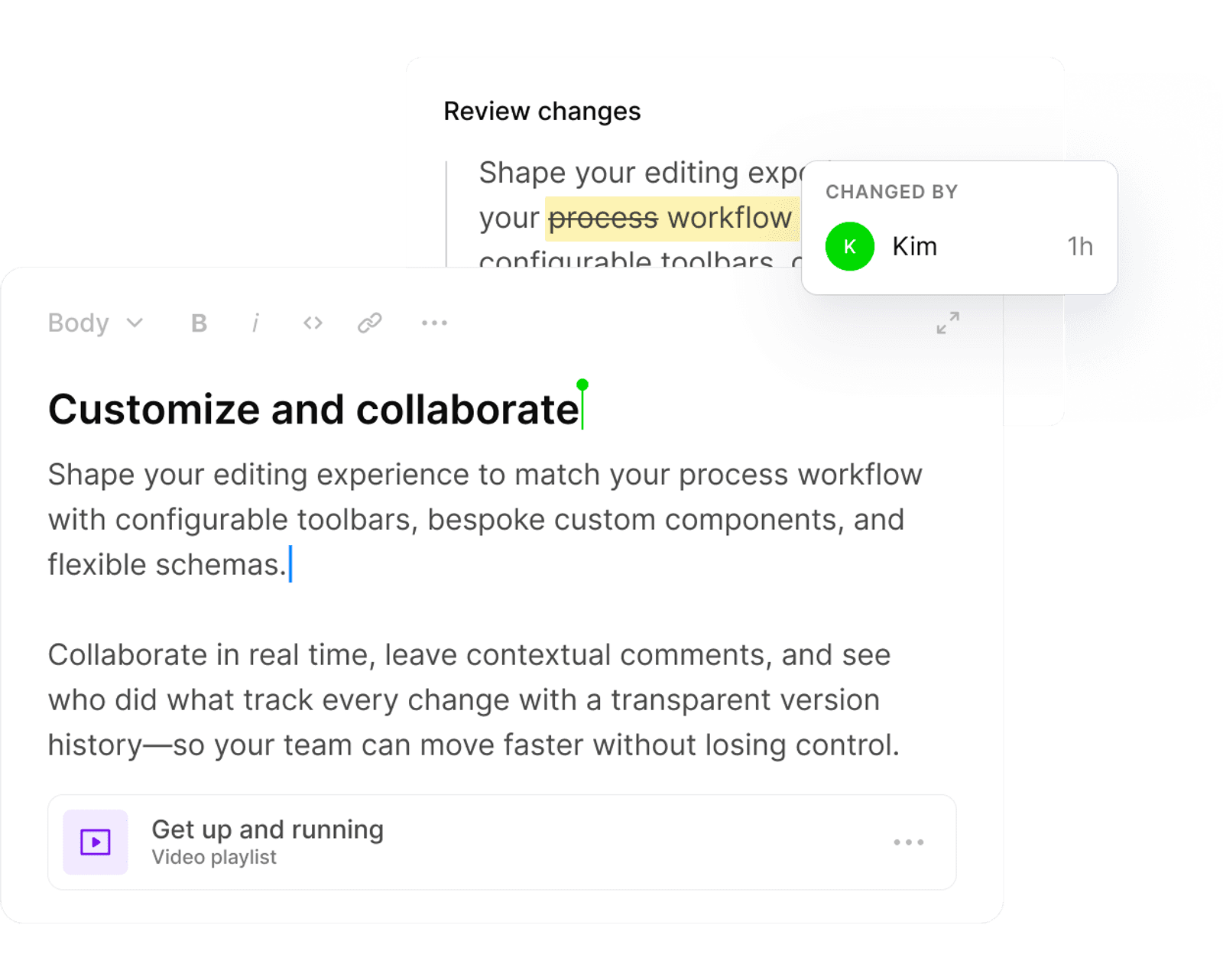
Sanity Studio collaborative editor — review changes, comments, and version history
Real-time collaboration

Comments, review changes, and full version history — marketing and design working in the same document.

SuiteCommerce logo
Storefront
Sanity logo
Content · headless CMS
NetSuite logo
ERP · system of record
Which approach fits

Native content, a headless CMS layer, or full headless commerce — side by side

Full headless commerce includes a headless CMS, so the content side of both columns is the same. The real question is narrower: does your storefront need rebuilding, or does it work and only your content workflow is stuck? This is the comparison we walk through with every team.

Native SuiteCommerceContent in the storeHeadless CMS layerSanity on your store · this pageFull headless commerceStorefront rebuild
What it isContent managed inside SuiteCommerce, in the storefront itselfA visual content layer (Sanity) on top of the store you already runA new decoupled storefront (Medusa / Shopify) — headless CMS included
What you rebuildNothingNothing — you add a content layer beside the storefrontThe storefront: catalog pages, cart and checkout
Marketing autonomyLimited — structural pages need a developer and a deployHigh — composed from a governed component libraryThe same — a headless CMS is part of the build
Where commerce data livesNetSuite, read natively by the storeNetSuite, read natively — the CMS never touches itNetSuite, plus a sync layer to keep the new storefront current
Front-end ceilingSuiteCommerce templatesSuiteCommerce templates — unchangedWhatever you can build — no platform ceiling
Time to valueImmediate, but capped by what SMT can doWeeks — the store keeps running throughoutMonths, and the storefront changes on go-live day
Best whenYour content rarely changes and the store is enoughThe store works and content is what’s holding you backThe storefront itself is the problem — UX, performance, B2B flows
Where it livesSuiteCommerce ThemesYou're hereHeadless Commerce

If you ship pages weekly and want to keep SuiteCommerce, the headless CMS layer is usually the right call. If you also need a new storefront, that's headless commerce — a bigger project. We build all three and recommend based on your case, not what we'd rather sell.

About headless CMS for ecommerce

A headless CMS for your NetSuite store, explained

A headless CMS separates your page content from the store that renders it, and hands marketing a dedicated workspace to build pages in. On a NetSuite store, that means Sanity owns the content while NetSuite stays the system of record for products, pricing, inventory, and orders. Below is what that means in practice, and how to tell whether it fits your team.

Want the storefront side too? This page is about content. If you're weighing a full storefront rebuild, start with NetSuite headless commerce.

Sanity sits on your SuiteCommerce store
No replatform
stays the system of record
NetSuite
building on NetSuite & SuiteCommerce
Since 2017
01

What is a headless CMS for ecommerce?

A headless CMS is a content management system with no built-in front end. Instead of rendering pages itself, it stores structured content — headings, images, blocks, campaigns — and delivers it to any storefront through an API. For an ecommerce store, that separates two jobs that are usually tangled together: running the store and publishing content.

On a NetSuite store, the split is clean. NetSuite and SuiteCommerce run the commerce; a headless CMS like Sanity runs the content. Marketing edits pages in the CMS without touching the store, and the store never depends on the CMS for a single product or price.

02

Headless CMS vs headless commerce — not the same thing

These get conflated constantly. A headless CMS decouples only the content: you keep your SuiteCommerce store and add a content layer on top. Headless commerce decouples the whole storefront — a new front end on Medusa or Shopify, kept in sync with NetSuite. One is a content upgrade with no replatform; the other is a storefront rebuild.

Most teams asking for "headless" actually want the CMS: they want marketing to ship pages faster, not to rebuild the store. If you do need a new storefront, that's a real and separate project — see NetSuite headless commerce. We'll tell you which one your goal calls for.

03

Why Sanity for a NetSuite store

Sanity is a headless CMS built around structured content and a fully customizable editing workspace, Sanity Studio. That matters here because we can shape the workspace to your store: a component library your marketers compose pages from, with field-level editing that keeps the design system intact. It has live preview, scheduled releases, real-time collaboration, and versioning — the workflow a busy marketing team actually needs.

Because it's content-only, it slots onto your existing SuiteCommerce store without disturbing commerce. NetSuite stays the system of record; Sanity just gives the content its own home.

04

What your marketing team can build

Landing pages, campaign pages, seasonal promotions, collection stories, and blog content — assembled from blocks we design: heroes, galleries, feature rows, forms, video, and promos. Each block opens as plain fields, so editors change a headline or swap an image without a ticket, a developer, or a deploy.

For content-driven growth on SuiteCommerce specifically, pair this with an in-store blog engine like Yello!, and see why even B2B ecommerce needs a blog.

05

How it fits your SuiteCommerce store — without a replatform

We model the content in Sanity, design the components, and connect them to your storefront so pages render from the CMS. Your SuiteCommerce store, checkout, and NetSuite integration stay exactly as they are. Nothing about how orders, inventory, or pricing work changes — only where page content is authored.

If you're weighing this against what SMT and Custom Content Types already give you, our guide on headless CMS for SuiteCommerce walks through where each approach stops paying off — including a quick test you can run on your own store before talking to anyone.

If you're also rethinking the storefront design, that overlaps with our SuiteCommerce themes work; a headless CMS is the content path within it.

06

Does a content layer hurt SEO? No — it helps

A well-built headless setup renders fast, server-rendered pages with clean metadata, structured data, and stable URLs — the signals search engines and AI answer engines reward. The advantage isn't the word "headless"; it's that marketing can finally ship relevant, well-structured pages at the speed campaigns move.

We preserve your existing storefront SEO through the change and build content that's easy for both Google and AI Overviews to cite. If SEO is the priority, see our ecommerce SEO service.

07

Is this right for you?

A headless CMS layer pays off when you publish pages weekly, when your heaviest campaign pages are also your slowest, or when every new block is another CCT that makes the next page slower instead of faster to build. If your content rarely changes and SMT already covers it, your current store may be enough — and we'll say so.

The honest answer comes from your publishing cadence, not a default recommendation. Book a call and we'll look at how your team actually ships content today.

Featured Work

Storefronts we design, build, and keep shipping

SuiteCommerce and NetSuite storefronts, brand systems, and integrations. See what we've delivered for teams running on NetSuite.

Process

How we set it up

From content audit to a marketing team that ships on its own. Typical timeline: 6-10 weeks, and you can start narrow.

  1. 1

    Content & page-type audit

    We map the pages marketing actually ships — landing pages, campaigns, collections, blog — and the fields each one needs. Duration: 1 week.

  2. 2

    Design the component library

    We design the block set — heroes, galleries, feature rows, forms, promos — as a system marketing can compose without breaking anything. Duration: 2-3 weeks.

  3. 3

    Model content in Sanity & wire the storefront

    We model the schema in Sanity and connect it to your SuiteCommerce storefront so pages render fast, with NetSuite still the system of record. Duration: 3-5 weeks.

  4. 4

    Train marketing & hand over

    We sit with your team, build a few real pages together, and leave documentation. The workspace is theirs from day one. Duration: 1 week.

  5. 5

    Go-live, support, and new blocks

    We publish, monitor, and add new components as campaigns demand. Your store never stopped running the whole time.

Investment

What drives the cost of a headless CMS setup

We don't publish fixed prices because a realistic figure depends on your scope. After discovery, we provide a detailed, scoped estimate.

Factors that affect cost:

  • Number of page types and how many blocks each needs
  • Size and custom design of the component library
  • How much existing content is migrated in
  • Depth of the storefront integration and preview
  • Team training and the handover you want

What's included:

  • Content & page-type audit
  • Custom component library design
  • Sanity content model & Studio setup
  • SuiteCommerce storefront integration
  • Marketing team training & documentation
  • 30-day post-launch support

Not included: Sanity subscription (paid to Sanity — it has a free tier and paid plans), NetSuite license fees (paid to Oracle), and ongoing new-block work beyond 30 days (available as a separate retainer).

Get a scoped estimate

Ready to give marketing its own workspace?

Book a call. We'll look at how your team ships content today, show you the Sanity workspace on a NetSuite store, and outline what your setup would involve.

What happens next:

  1. 1We'll respond within 24 hours to schedule a call
  2. 2On the call, we'll review how you publish content today
  3. 3If there's a fit, we'll provide a scoped proposal

No pressure. Just an honest conversation about whether a content layer is the right move for your store.

Tell us about your project

We respond within 24 hours.

FAQ

What teams ask about a headless CMS on NetSuite

01

What is a headless CMS for ecommerce?

+

A headless CMS is a content management system that stores your page content separately from the store that renders it, and delivers that content to any front end through an API. For an ecommerce store, it means your marketing team edits pages — heroes, landing pages, campaigns, blog posts — in a dedicated content workspace, while the storefront and the commerce engine keep running underneath. On a NetSuite store, a headless CMS like Sanity owns the content while NetSuite stays the system of record for products, pricing, inventory, and orders.

02

What is the difference between a headless CMS and headless commerce?

+

A headless CMS decouples only the content: you keep your SuiteCommerce store and add a content layer on top, so marketing can build pages from a component library instead of commissioning each one. Headless commerce goes further — it replaces the whole storefront with a decoupled front end (on Medusa or Shopify, for example) kept in sync with NetSuite. A headless CMS is a content upgrade with no replatform; headless commerce is a storefront rebuild. Most teams that just want marketing autonomy need the CMS, not the replatform. We build both, so we can tell you which one your goal actually calls for.

03

Do I have to replatform my SuiteCommerce store to use Sanity?

+

No. That is the whole point of this approach. Sanity sits alongside your existing SuiteCommerce storefront as a content layer — your store, checkout, and NetSuite stay exactly as they are. We connect the content to your storefront so pages render from Sanity, without moving your commerce off SuiteCommerce. SuiteCommerce keeps doing what it does well; Sanity adds the page-building workflow it was never meant to handle.

04

Does NetSuite stay the system of record?

+

Yes. A headless CMS owns content only — copy, images, page structure, campaigns. Products, pricing, inventory, customers, and orders stay authoritative in NetSuite, exactly as they are today. Your finance and operations teams keep working in NetSuite; marketing gets a separate workspace for pages. The two never fight over the same data because they own different things.

05

Can marketing break the storefront by editing content?

+

No — that is designed out. Marketing composes pages from a component library we build, and each block opens as plain fields (heading, image, CTA), not code or raw layout. The design system stays intact and the store keeps running; the worst case is a page that needs a tweak, not a storefront that goes down. Live preview and scheduled releases mean nothing goes public before someone has seen it render.

06

Will a headless CMS hurt my ecommerce SEO?

+

Done right, it helps. A headless CMS lets you ship server-rendered, fast, well-structured pages with clean metadata, schema, and internal links — the things search engines and AI answer engines reward. The gains come from the implementation, not the label: we render content into fast pages, keep URLs stable, and preserve your existing storefront SEO. Marketing shipping more relevant pages, faster, is itself an SEO advantage.

07

Is Sanity free?

+

Sanity has a free tier that covers small projects and paid plans that scale with usage, seats, and features. The plan you need depends on how many editors, environments, and how much content you run — we scope that with you as part of the build, so you are not guessing. The subscription is paid to Sanity; our work is the design, setup, component library, and the connection to your NetSuite store.

08

Who owns the content and the code?

+

You do. The content lives in your Sanity project, and the component library, schema, and storefront integration we build ship with you — no lock-in to us. If you ever want to take it in-house or hand it to another team, everything is documented and yours. We would rather earn the next project than trap you in this one.

09

How long does it take to set up a headless CMS on a NetSuite store?

+

A focused setup — a core component library, the Sanity model, and the storefront connection — typically takes six to ten weeks, depending on how many page types and blocks you need and how custom the design is. We can start narrow (landing pages and campaigns) and add block types over time, so marketing gets a working workspace early rather than waiting for everything at once. After a short discovery we give you a scoped timeline, not a generic range.

10

Is a headless CMS worth it for a smaller ecommerce team?

+

It depends on how often your content changes and what your pages already weigh. If you ship landing pages and campaigns weekly, and your richest pages are also your slowest, a content layer pays for itself quickly — in speed, and in a component library that finally compounds. If your pages rarely change and SMT already covers what you publish, your existing store may be enough — and we will tell you so. The honest answer comes from your publishing cadence, not a default recommendation.

Still have questions? We'd love to hear from you!

Talk to a NetSuite specialist
Get in Touch