









Blog posting made easy for SuiteCommerce
A native SuiteCommerce blog system fully managed within NetSuite. Supports categories, tags, archiving, and deep configuration with no extra software required.
Your storefront can look like a modern brand — on the platform you already run. Start from an official NetSuite theme, put your brand on it, or design an experience from zero with a headless CMS your marketing team will actually enjoy.
Quick reply, from the team that lives in NetSuite.
Tell us about your projectNetSuite ships prebuilt Commerce Themes with SuiteCommerce — included with the license, installed as SuiteApps, each aimed at a different industry. They're solid starting points, not ceilings: every one of them can carry your brand's colors, typography, and photography once it's implemented properly.
Not sure which one fits your catalog? We've implemented these themes across B2B and B2C — we'll tell you which one gets you live fastest, and what it will and won't do for your brand.
Get a theme recommendationThe neutral foundation included with every SuiteCommerce license. Clean, responsive, and intentionally unopinionated — the best starting point for a custom design.

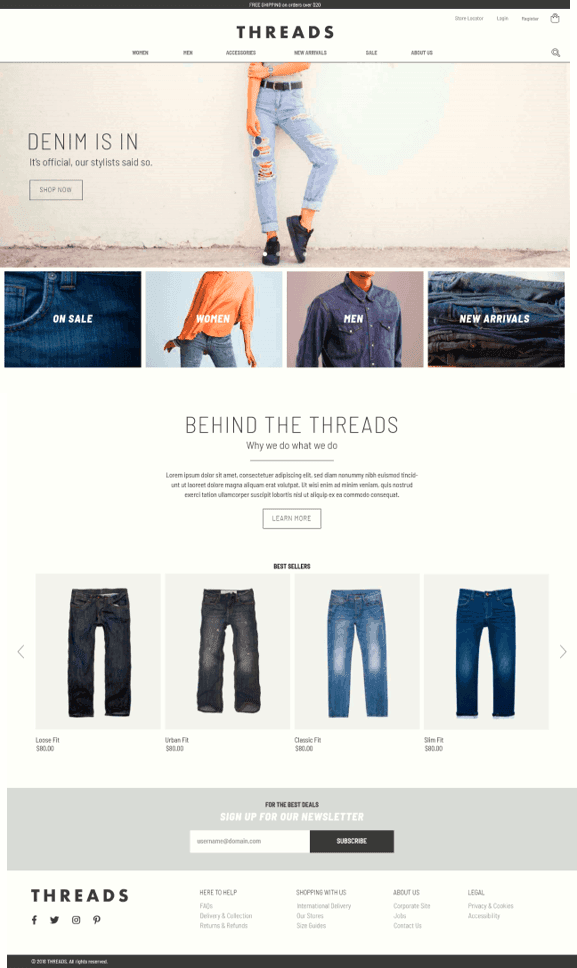
Built for apparel web stores: editorial layouts, homepage banners, quick category access, and the mobile experience fashion shoppers expect.

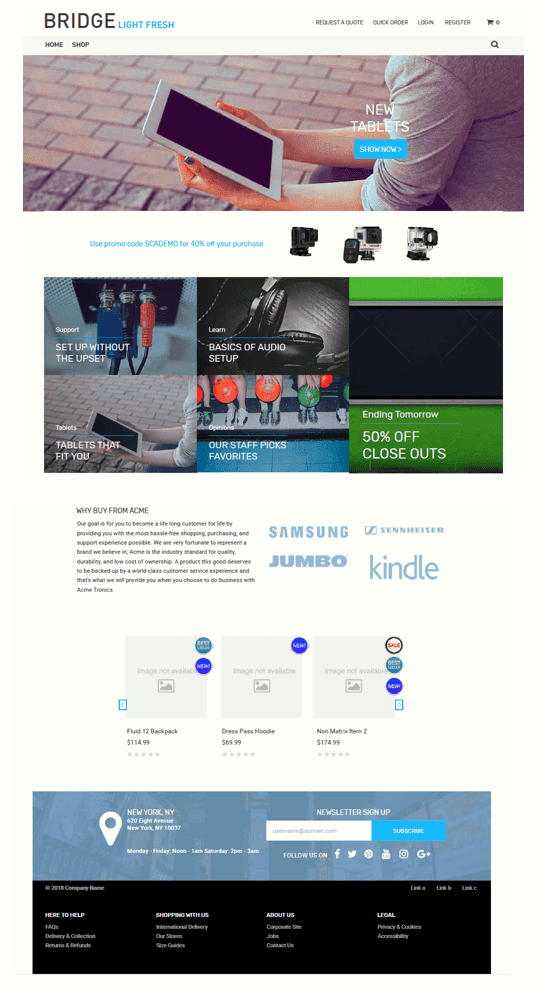
A tech-oriented design that also serves B2B catalogs well — simplified navigation and order-efficient layouts for buyers who come back weekly.

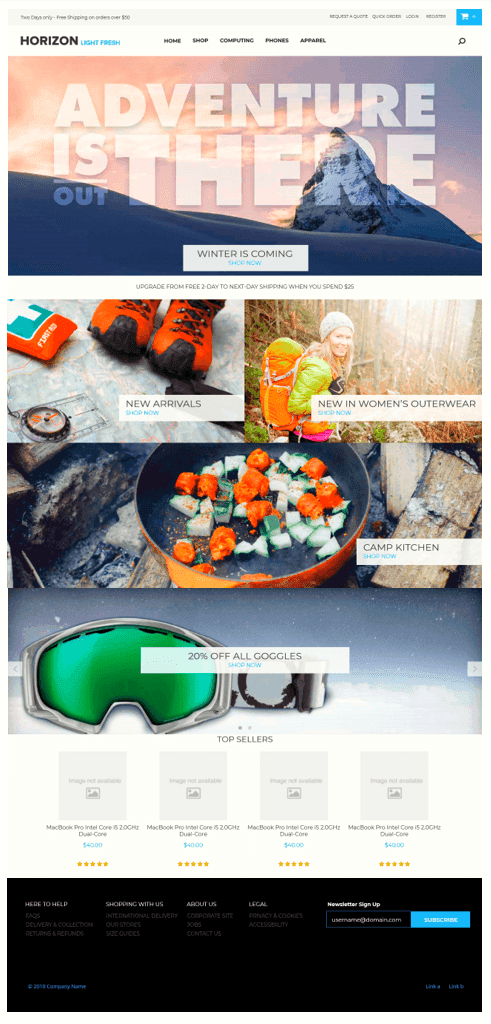
Bold hero imagery and streamlined content blocks. Built for brands whose photography does the selling.

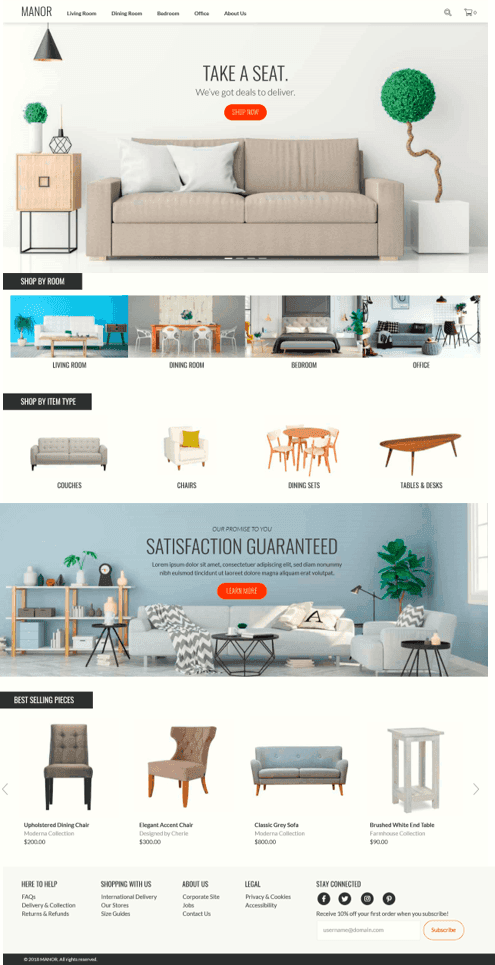
Roomy layouts designed for home products — large photography, collection showcases, and browsing patterns suited to considered purchases.

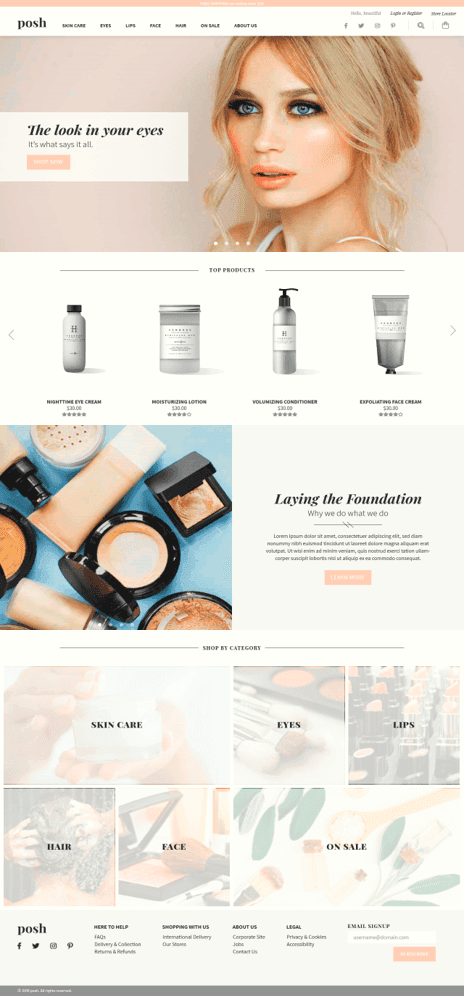
A polished theme for beauty brands, designed to present product lines elegantly for both B2C shoppers and B2B buyers.

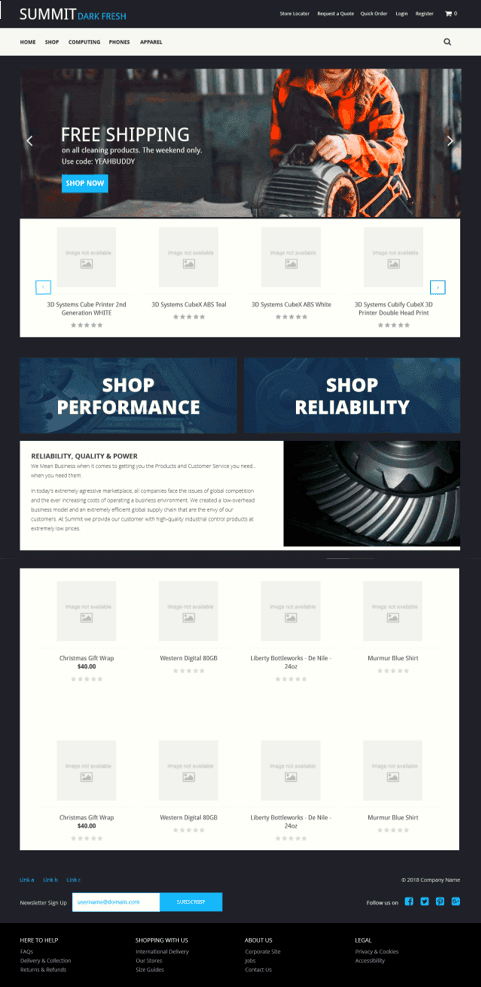
Designed for industry-supply web stores: dense catalogs, quick category access, and layouts that put product findability first.
Theme previews from Oracle's official NetSuite Commerce Themes documentation. Hover a preview to scroll the full page.
An official theme is a starting point, not a final look. We implement the theme, then apply your branding on top — palette, typography, photography direction, and the details that make it read as yours.
Implement it with your brandingDesigners and SuiteCommerce developers on the same team — we design the storefront and build it, so nothing gets lost in translation between an agency mockup and the platform. Palette, type system, photography direction, and conversion details, applied consistently from homepage to checkout.
Request a storefront brand auditLayouts built from your brand system — not a template with your logo dropped in.
Homepage, category, and PDP experiences shaped around how your catalog actually sells.
The people who design the storefront are the ones who implement it in SuiteCommerce.
Trust signals, clear CTAs, and checkout polish treated as part of the design, not an afterthought.
For teams that ship campaigns, landing pages, and content weekly, we design the experience from zero and pair your SuiteCommerce storefront with Sanity as a headless CMS — for content only. Marketing composes pages from components we design; the platform doesn't change. SuiteCommerce keeps serving the store, and pricing, inventory, and orders stay exactly where they belong — in NetSuite.


Marketing assembles landing pages from blocks we design — heroes, galleries, newsletter forms, video, promotions.

Every block shows a preview of its layout before it's added. Marketing picks designs, not code.

Reorder and edit blocks and watch the real page update right next to the editor — before anything goes public.

Each block opens as plain fields — heading, tagline, image. The design system stays intact, impossible to break.

Stage every page change for a campaign and publish it all together, on a date — automatically.

Comments, review changes, and full version history — marketing and design working in the same document.
There's no single right answer — it depends on your catalog, brand maturity, and how your marketing team works. This is the comparison we walk through with every client.
| Criteria | Official theme + brandingFastest launch | Custom-branded theme35+ delivered | Custom + headless CMSMarketing autonomy |
|---|---|---|---|
| Best for | Launching fast on a proven layout | Brands where the storefront must look like the brand | Marketing teams shipping content and campaigns weekly |
| Typical timeline | 4–6 weeks | 6–8 weeks | 10–14 weeks |
| Relative investment | $ | $$ | $$$ |
| Design differentiation | Your colors, logo, and type on a stock layout | Layouts and UX designed from your brand, not a template | Fully custom experience, page by page |
| Content editing | Site Management Tools (in-context editing) | Site Management Tools (in-context editing) | Sanity headless CMS — component-based pages, live preview, scheduling |
| Keep in mind | Layout options are fixed by the theme | Design phase adds 2–3 weeks up front | Larger scope — the store still runs on SuiteCommerce; Sanity handles content only |
| Get started | Start with a theme | Brief our designers | Scope a headless build |
Trusted by mid-market companies across industries
See how we've transformed brands into custom SuiteCommerce experiences.
A native SuiteCommerce blog system fully managed within NetSuite. Supports categories, tags, archiving, and deep configuration with no extra software required.
SuiteCommerce development for Cartridges Direct in Australia: a 3-step cartridge finder tool that simplified product discovery across 10,000+ SKUs.
Simplify deck plug and screw selection for DIY home improvement projects. Deckmatch helps home centers and DIYers find the right fasteners easily.
Discover how BrokenRubik built a custom draft order system in SuiteCommerce, letting B2B reps manage parallel orders without cart limitations.
How IC Realtime unified HubSpot and NetSuite via Celigo to sync sales orders, line items, tracking numbers, and deal data across their CRM and ERP in real time.
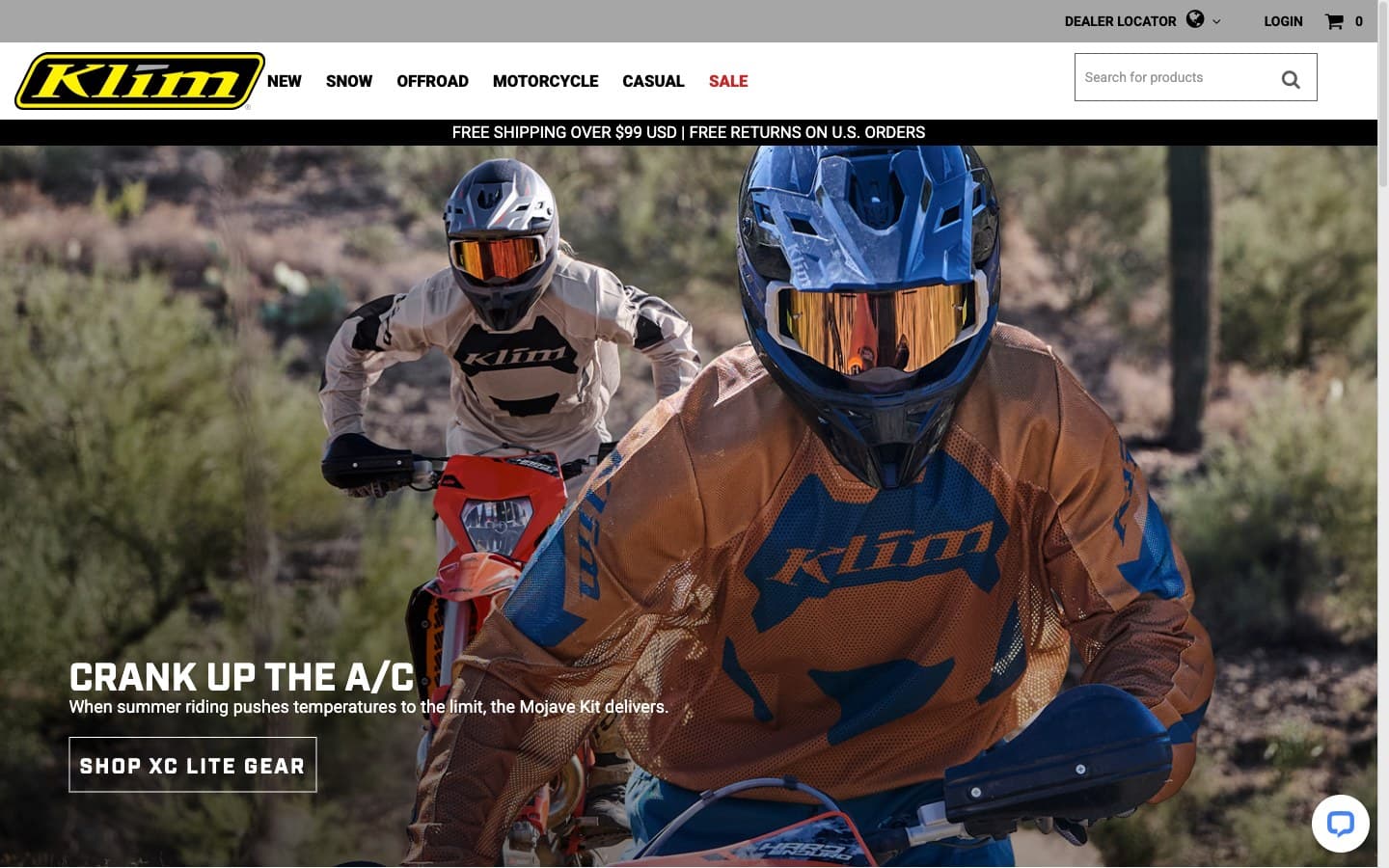
Transforming KLIM's B2B order management from manual Excel to a seamless digital tool, boosting efficiency and collaboration for preseason orders.
That's the usual fear with a redesign — and the reason to do it with one team that covers every flank. The designers who restyle your storefront sit next to the people who tune its performance, run its SEO, and keep NetSuite wired underneath.
A SuiteCommerce theme decides how your store looks, how it converts, and how much work it takes to keep current. In 2026 you have three real options: implement an official NetSuite theme with your branding, commission a custom theme designed from your brand, or build a fully custom experience with a headless CMS on top. We've delivered 35+ of them — here's how to think about it.
NetSuite ships prebuilt Commerce Themes with every SuiteCommerce license — Base, Threads, Bridge, Horizon, Manor, Posh, and Summit — each designed for a different industry, from apparel to industrial supply. They install as SuiteApps and give you a proven, responsive layout on day one.
One disambiguation worth making: NetSuite color themes change the look of the NetSuite back office your team logs into; SuiteCommerce Commerce Themes style the web store your customers see. If you searched "NetSuite themes" looking for the first kind, this page is about the second.
Modern theme builds use NetSuite's SuiteCloud Development Framework (SDF) so themes deploy as code, version-control through Git, and survive Oracle release upgrades cleanly.
Custom themes that bypass SDF and deploy through the UI eventually become orphaned — nobody knows how to maintain them, every release breaks something. We build SDF-native from day one, whether we're re-branding an official theme or building from scratch.
SuiteCommerce's Site Management Tools let marketers edit content in context, directly on the storefront. For many teams that's enough. Teams that publish campaigns and landing pages weekly often want more: component-based page building, live preview, scheduled publishing, and one content hub across storefront and blog.
That's the case for pairing SuiteCommerce with a headless CMS like Sanity. Marketing works in a modern editor; the SuiteCommerce storefront pulls that content through APIs; NetSuite remains the system of record for products, pricing, inventory, and orders. Note that this is not the same as headless commerce: a headless CMS externalizes content only, while headless commerce replaces the storefront itself. If what you're actually weighing is a full storefront replatform, that's our NetSuite headless commerce service — a different project.
A beautiful theme that loads slowly costs you revenue. We bake performance into theme design: optimized images, lazy loading, JavaScript bundle splitting, critical CSS, Core Web Vitals tuning — plus conversion patterns like clear CTAs, simplified checkout flows, and search-first navigation for B2B catalogs. See our performance optimization service.
Whichever path you pick, the process starts the same way: understanding your catalog, brand, and how your team publishes content. 90% of clients stay with us after launch, and our themes have survived 24+ NetSuite releases.
We review your catalog, brand maturity, and how your marketing team works — then recommend official theme, custom design, or headless. You get the reasoning, not just a quote. Duration: 1 week.
For branded and custom paths: mockups for key pages (homepage, PDP, category). You review and iterate until we nail it. Official-theme projects move straight to branding application. Duration: 1-3 weeks.
We build in SuiteCommerce — implementing pages, components, and responsive layouts. Projects with Sanity add the content model and component library here. Duration: 3-4 weeks.
Cross-browser testing, mobile validation, performance optimization, and fixing any issues. Duration: 1 week.
We deploy to production, provide documentation, and train your team — including marketing, on whichever editing tools your path includes. You're live.
Pricing depends on the path: official-theme implementations with branding sit at the lower end, full custom design and headless builds at the upper. Most custom theme projects: $25K-$60K.
Tell us where you are — evaluating themes, stuck on a stock look, or planning a redesign — and we'll recommend a path with real scope and timeline.
NetSuite ships prebuilt Commerce Themes with SuiteCommerce, including Base (the neutral foundation), Threads (apparel), Bridge (tech and electronics), Horizon (outdoor), Manor (furniture and home), Posh (beauty), and Summit (industrial supply). Each targets a different industry and layout style, and all of them can be re-branded. Oracle's documentation lists the current catalog, which evolves with NetSuite releases.
The official Commerce Themes are included with a SuiteCommerce or SuiteCommerce Advanced license — there's nothing to buy or download from a marketplace. They install into your NetSuite account as SuiteApps and you activate one per site. What isn't included is the implementation work: configuring the theme, applying your branding, and adapting layouts to your catalog.
They're unrelated features that share a name. NetSuite color themes (and the Redwood experience) change the appearance of the NetSuite back office that your internal team uses. SuiteCommerce themes control your customer-facing web store — its layout, typography, and shopping experience. This page is about the second kind.
A theme controls how your SuiteCommerce site looks: layouts, styling, templates. An extension adds functionality: product badges, quick order forms, store locators. Both install as SuiteApps and deploy through SDF. A well-architected site keeps them separate, which is what lets you restyle without breaking features — or add features without touching the design.
Yes, with planning. Because themes and extensions are separate layers, functionality generally carries over when you switch themes. The catch is that the more theme-level customizations you've accumulated, the more compatibility work the switch requires. We audit what you have first, so you know the real scope before committing.
SuiteCommerce includes Site Management Tools for in-context editing directly on the storefront. When marketing teams need more — component-based page building, live preview, scheduled publishing, one hub for storefront and campaign content — we pair the storefront with Sanity as a headless CMS. The site itself stays on SuiteCommerce, and NetSuite keeps running pricing, inventory, and orders; marketing gets a modern content workspace.
No, and the distinction matters for scope. Headless commerce replaces the storefront itself — a custom frontend consuming commerce APIs, which is a replatforming project. A headless CMS like Sanity only externalizes content management: your store keeps running on SuiteCommerce, and marketing edits pages, campaigns, and editorial content in a modern editor that the storefront pulls in. The SuiteCommerce + Sanity setup on this page is the second one — no replatform involved.
Yes. We regularly implement designs from external agencies. Send us Figma, Sketch, or even PDFs — we'll translate them into a working SuiteCommerce theme. We'll flag anything that's not feasible in SuiteCommerce and suggest alternatives.
6-8 weeks for a complete design-to-launch project. If you provide finished designs, we can often deliver in 4-5 weeks. Official-theme implementations with branding usually land in 4-6 weeks, and complex B2B portals or headless builds may take 10-14 weeks.
We build themes using SuiteCommerce extension architecture and follow Oracle's best practices. This means your customizations live outside the core code and survive quarterly updates. We also test against sandbox releases before they go live.
Yes. We've built themes for consumer ecommerce (B2C), dealer portals (B2B), and hybrid sites that serve both. B2B themes often include role-based pricing, quick order forms, and account hierarchies.
Yes. We offer theme modernization services — updating visuals, improving UX, fixing performance issues, and making your existing theme responsive. Sometimes a refresh is more cost-effective than starting from scratch.
Yes. We offer monthly retainers for theme maintenance, updates, and minor enhancements. Most clients stay with us because themes need occasional tweaks as business needs evolve.
Still have questions? Drop us a message, we'd love to hear from you!
Talk to a NetSuite specialist