Contents4 sections ↓
Overview
After struggling with performance in SuiteCommerce Advanced, a construction-focused eCommerce business made the decision to migrate to Shopify. Their goals were clear: improve site speed, enhance user experience, and recover SEO ground lost to competitors. With the help of a specialized SEO agency, the team transformed their online store over seven months, laying the groundwork for long-term growth.
Challenge
While NetSuite offers powerful backend capabilities, especially for order and inventory management, its SuiteCommerce frontend was no longer meeting the company’s eCommerce needs. The platform felt outdated, was costly to maintain, and lacked the performance required to compete after a Google algorithm update led to a loss in long-tail keyword rankings. Meanwhile, competitors using Shopify were gaining visibility and market share.

The team briefly considered alternatives like WooCommerce, BigCommerce, and Magento, but Shopify quickly stood out as the dominant platform among their most successful peers. Key challenges included selecting the right theme for performance, rethinking their approach to pricing, and working around frontend limitations in their existing stack.

Solution
Development Process
The DevTeam drove the project with deep product and operational knowledge. To accelerate results and ensure SEO health, they partnered with an external agency that audited the site and provided performance guidance.
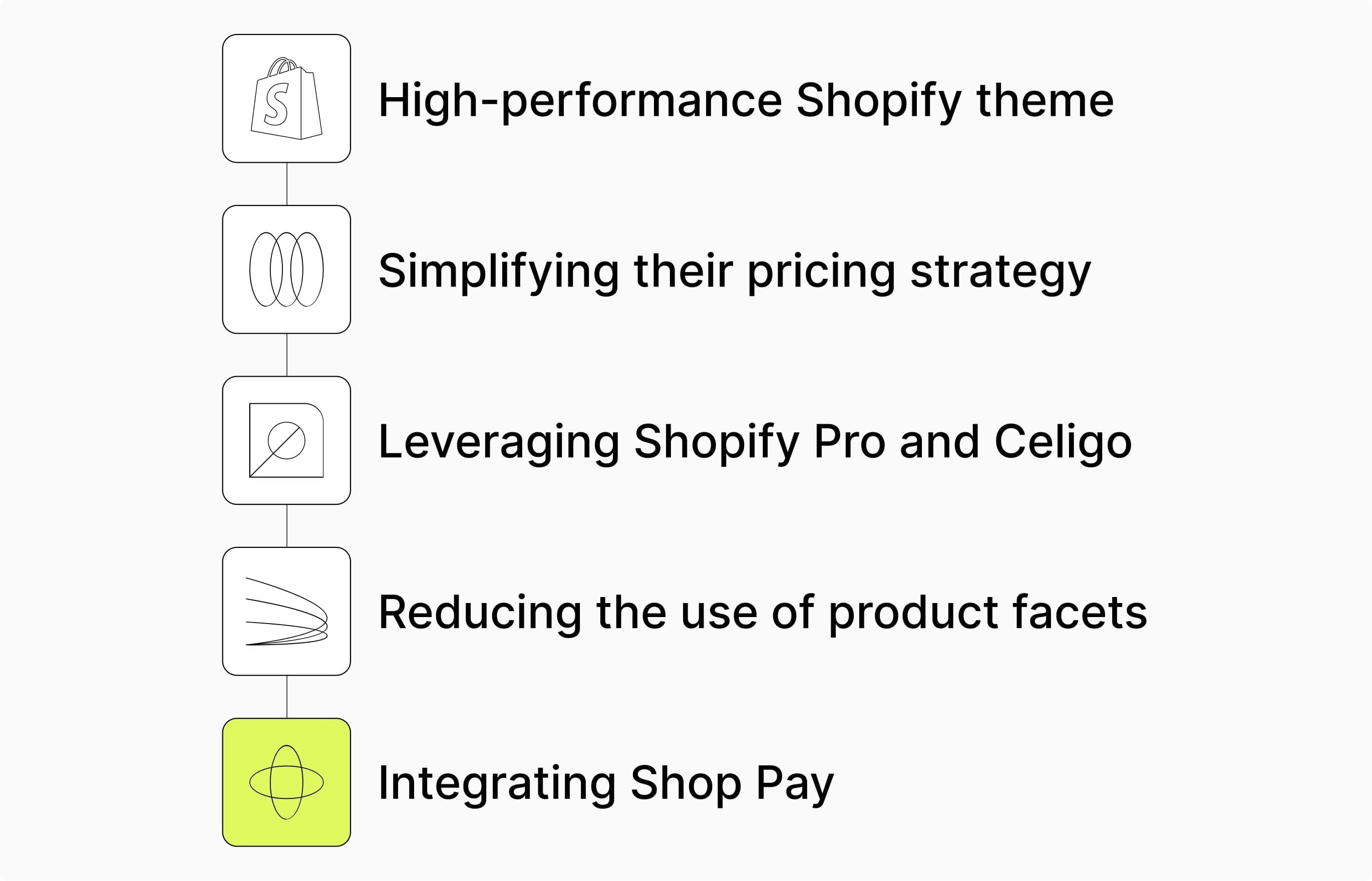
Critical decisions included:
Selecting a high-performance Shopify theme after testing several.
Simplifying their pricing strategy by replacing tiers with discount percentages.
Leveraging Shopify Pro and Celigo to connect with NetSuite, while adapting to some integration trade-offs.
Reducing the use of product facets to boost page load times.
Integrating Shop Pay for an improved checkout experience and built-in fraud protection.
The approach prioritized lean infrastructure and speed-first design.
Implementation
NetSuite remained a core part of their operations, particularly for order entry (including phone orders), inventory tracking, and accounting. The team continued using Celigo for integration, which allowed Shopify and NetSuite to work together effectively in many areas.

However, some adjustments were needed. For example, NetSuite’s price level logic didn’t sync into Shopify via standard connectors, and return flows required manual coordination. These were not blockers, but trade-offs the team managed carefully, given their priority on performance and simplicity.
Redirects from the old SuiteCommerce URLs were another focus, with three weeks dedicated to ensuring clean SEO transitions. To avoid bloating the new Shopify site, they minimized third-party apps, aware of the impact each one can have on speed.

Outcome
Results
Seven months post-migration, web order volume had increased, and site speed had significantly improved. SEO recovery was ongoing: while one team member believed the dip lasted only a month, another felt the full rebound hadn’t yet materialized. Either way, early signs were encouraging, with better user engagement and growing conversions.

The company is now investing in further differentiating themselves from their competitors by adding new features that will result in a better customer experience which is a result of the confidence they have on the work that was done and the way the system works. NetSuite continues to play an important role behind the scenes, supporting key operational processes.

Conclusion
This project shows that a flexible eCommerce frontend, paired with a strong ERP, can deliver excellent results. By moving to Shopify, the company gained the speed, usability, and eCommerce agility they needed, while still leveraging NetSuite’s robust backend systems.
Their experience underscores the value of internal ownership, performance-focused design, and thoughtful platform integration. For eCommerce brands aiming to compete in fast-moving digital markets, a balanced tech stack is key.

💡Pro Tip: Choose themes that are performance-optimized out of the box, and minimize app dependencies to preserve site speed
Interested in similar results?
Let's discuss how we can help transform your business.
Start a ConversationShare this case study
Help others discover this success story